If you’re trying to choose between virtual and in-person couples therapy or sex therapy in New York, you’re not the only one. A lot of people in this city are in the same boat. There are a lot of therapists in New York, but the long commutes, busy schedules, and high value on privacy make the choice between formats really important.
The short answer is that both types of therapy can work well for couples and sex therapy. The best choice for you will depend on what you’re doing, how things are going in your life right now, and your situation.
This article talks about the real differences between couples and sex therapy in New York that takes place in person and online. It’s not the marketing version but the practical one, so you can choose the one that works best for you.
Table of Contents
What Sets Couples and Sex Therapy Apart from Individual Therapy?
It’s important to know why the virtual-versus-in-person question is more important for couples work and sex therapy than it is for individual therapy before comparing formats.
In individual therapy, the therapist and the client are the main relationship. In couples therapy, the therapist watches both partners at the same time. They are in charge of the alliance with both partners, reading how they talk to each other, and stepping in when communication breaks down. Clients often need a certain level of safety and privacy in sex therapy conversations, which affects how they choose to participate.
Both of these specialties have been successfully delivered through telehealth for a long time, especially since 2020. But each of them has its own things to think about when picking a format.
Why New York Should Use Virtual Therapy
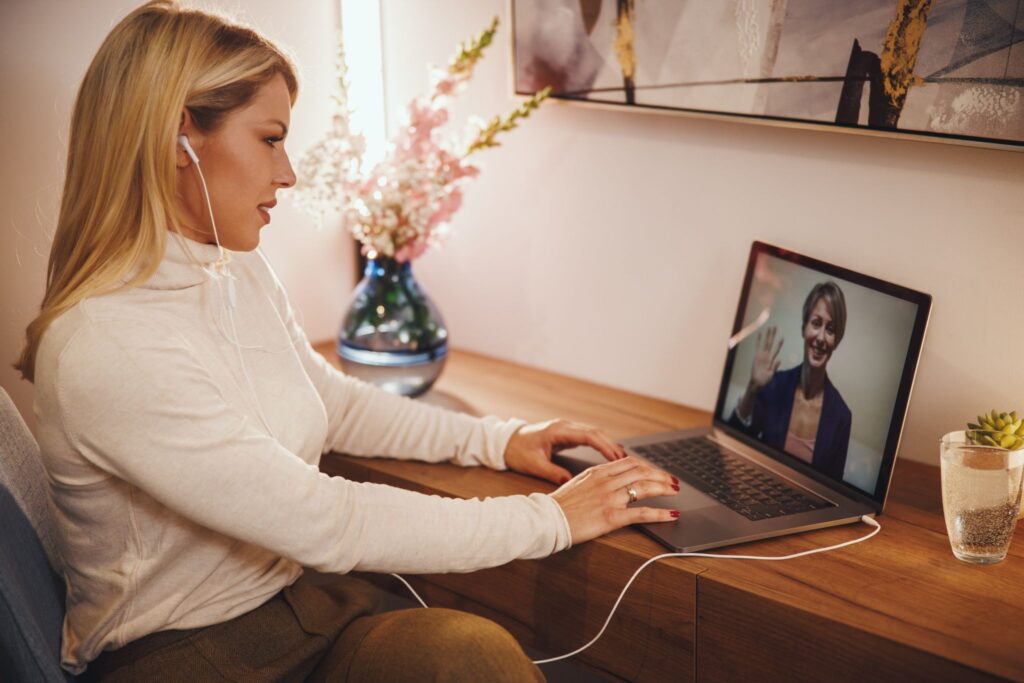
For a lot of people in New York, virtual therapy isn’t just a backup plan; it’s the best option. Here is why:
It gets rid of one of the biggest problems with therapy in New York: logistics.
It’s not easy to get two people to the same office at the same time in New York City. One partner lives in Brooklyn and the other works in Midtown. One has a standing appointment at 7 PM, and the other can only meet in the morning. It’s a big deal to have to travel 45 minutes each way for a session, and if schedules clash, the session is canceled. This is completely gone with virtual therapy.
Some topics are more private than others.
Sex therapy, in particular, benefits from being in a familiar place where no one can see or hear you. Many clients feel more comfortable talking about sexual issues at home than in an office they don’t know. There is no waiting room to get through, no chance of running into someone you know, and no way to get back into public space right after a private conversation.
It gives you access to specialists who might not have an office nearby.
There are a lot of therapists in New York, but very few of them are both AASECT-certified in sex therapy and EFT-certified in couples therapy. When you need very specific help, the therapist is more important than the zip code. Virtual therapy gives New Yorkers access to the exact mix of credentials and clinical approach that works best for them.
It’s easier to stay consistent.
One of the best signs that therapy is working is that the sessions are consistent. It’s much easier to keep a regular schedule with virtual therapy, especially for couples with different schedules, people who travel a lot, or anyone who has a lot of work to do.
The Argument for In-Person Therapy
There are real benefits to in-person therapy, and for some clients and some issues, it is the best option.
Being there in person can help with emotional control.
Being physically present with a skilled therapist can help couples who are in a lot of conflict or dealing with a lot of relationship trauma control their emotions. The therapist can slow things down, read body language better, and use their body to help things calm down when they get too heated. This is important for some couples, especially at the beginning of the work.
A neutral space can change the way people act.
There are connections between home environments. For couples who have had the same hard conversations in the same living room over and over, going to therapy in a different, neutral, intentionally designed space can help. Going to an appointment together can be part of the ritual of being there for the relationship.
Some clients just like it better that way.
Preference is a valid clinical variable.

If either partner believes that in-person therapy would facilitate greater engagement or honesty, that preference should be respected. One of the best signs of how well someone will do in therapy is how engaged they are in it.
What the Research Really Says
Since 2020, there has been a lot more research on the results of telehealth therapy. For the majority of issues addressed in couples therapy and sex therapy—such as communication difficulties, desire discrepancies, performance anxiety, infidelity recovery, and intimacy challenges—both virtual and in-person formats yield similar outcomes, provided that the therapeutic relationship is robust and sessions are regular.
The format is not usually the most important factor. The therapist’s training, the method being used, and the consistency of the work are much better at predicting the outcome than whether the sessions take place on a screen or in an office.
Questions to Help You Decide
If you’re still not sure what to do, these questions are usually the most helpful:
• Is it possible for both of us to go to a physical office on a regular basis, like once a week or every other week?
• Is there a place in our home where we can talk freely without being interrupted?
• Are we in a crisis right now, or are we dealing with problems that have been around for a long time and need ongoing work?
• Do we need a certain therapist or set of credentials, no matter where they are?
• Do either of us really care about one format? If so, why? Is that something worth looking into?
Questions that are often asked
Is it legal and licensed in New York to do virtual couples therapy?
Yes. In New York State, telehealth therapy is completely legal. A therapist who works with clients in New York must have a valid New York license. Mark Goldberg is a licensed LMFT in New York and can provide telehealth couples therapy and sex therapy to clients all over the state.
Is it really possible to do sex therapy online?
Yes. Sex therapy is a type of therapy that only involves talking; there is no physical contact between the therapist and the client. Virtual sex therapy has been shown to work for a wide range of problems, including sexual dysfunction, performance anxiety, intimacy issues, and more. A lot of clients say that talking about these things at home is easier, not harder.
What if my partner and I are not in the same place?
Virtual couples therapy can work for partners who are in different places, like two different rooms, two different devices, or even two different boroughs. Telehealth works as long as both partners are in New York State during the session. This is especially helpful for couples who have to deal with travel or work schedules that don’t overlap.
What does it mean to be an AASECT Certified Sex Therapist, and why is it important in New York?
The American Association of Sexuality Educators, Counselors, and Therapists (AASECT) certification is the highest level of clinical training for sex therapists. It requires more training, supervision, and testing than a regular license. A lot of therapists in New York offer sex therapy as a service, but they don’t have this certification. Mark Goldberg is AASECT Certified and also has an EFT certification in couples therapy. This is a rare combination in New York.
How do I begin virtual couples or sex therapy in New York?
CICC gives you a free 15-minute consultation to help you decide if it’s right for you before you sign up. You can call or email and briefly explain what you’re going through to see if this method is right for you. You don’t have to do it.
CICC in New York City
The Center for Intimacy, Connection, and Change provides online couples therapy and sex therapy to people all over New York State, including Manhattan, Brooklyn, Queens, the Bronx, Staten Island, Westchester County, and Long Island. Mark Goldberg, LCMFT, is an AASECT-certified sex therapist and an EFT-certified couples therapist. He also has a license to provide telehealth services in New York.
If you’re trying to decide between virtual and in-person options and want to talk about whether CICC is the right place for you, you can have a free 15-minute consultation with no strings attached.
Call 443-835-6991 or send an email to office@centericc.com to set up a time. All sessions for clients in New York are done over the phone.