You searched for a sex therapist near me and all the profiles sound alike. One says certified, one says specialist, one says sexologist, one says intimacy coach.
There’s no obvious way to tell which of those means anything. Some of these are years of supervised training, some of these are a person choosing to use words.
This guide will explain what it means to be AASECT certified, what it doesn’t tell you and how to check a Maryland clinician’s credentials yourself in about five minutes.
Table of Contents
What Is an AASECT Certified Sex Therapist?
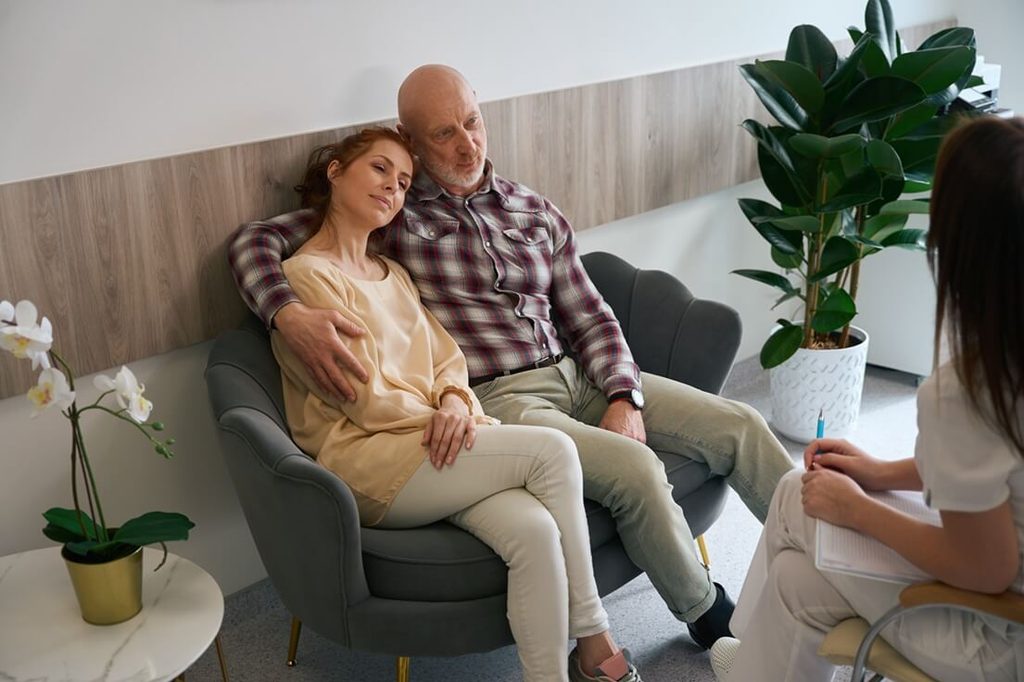
An AASECT Certified Sex Therapist is a licensed mental health professional who has completed advanced sexuality-specific coursework, supervised clinical hours with clients presenting sexual concerns, and certification through the American Association of Sexuality Educators, Counselors and Therapists (AASECT).
The certification is a separate credential in addition to your clinical license. It is not in itself a license and can only be held by someone who is already licensed to practice psychotherapy independently.
That distinction is the most important thing for a Maryland client to understand and is where most confusion starts.
Does Maryland License Sex Therapists?
No. Maryland licenses the profession that underlies it, not the sexual health specialty.
To be eligible to practice psychotherapy in Maryland, a clinician must be licensed by the appropriate state board, such as a Licensed Clinical Marriage and Family Therapist, Licensed Clinical Professional Counselor, Licensed Certified Social Worker-Clinical, or a licensed psychologist.
But none of these licenses is designated as a sex therapist. Maryland doesn’t issue one, and no state board reviews whether a therapist has training in sexual health before the therapist lists it as a specialty.
The purpose of the AASECT credential is that. It is the field’s own response to a gap in state regulation and it is currently the most widely recognized standard in the United States.
What is really required for AASECT certification?
Considerably more than most people assume. The current requirements for AASECT Certified Sex Therapist certification include:
- A valid state license or certificate permitting independent psychotherapy practice, in a field such as psychology, medicine, social work, counseling, nursing, or marriage and family therapy.
- A master’s degree plus two years of post-degree clinical experience, or a doctoral degree plus one year.
- At least 90 clock hours of core knowledge training across 17 required sexuality content areas.
- At least 60 clock hours of sex therapy skills training.
- A Sexuality Attitude Reassessment, a structured group experience of at least 14 hours.
- At least 300 hours of supervised clinical treatment with clients presenting sexual concerns.
- At least 50 hours of supervision with an AASECT Certified Supervisor, spread over a minimum of 18 months.
- Renewal every three years, with continuous AASECT membership required to keep the certification active.
The 18-month minimum is worth noticing. The certification is structured so that it cannot be completed quickly, which is the point.
These requirements are published by AASECT and are updated periodically. The current version is available on the AASECT certification requirements page.
What Is a Sexuality Attitude Reassessment?
A Sexuality Attitude Reassessment, usually called a SAR, is a structured group training experience in which clinicians examine their own attitudes, assumptions, and discomfort around sexuality.
It is the requirement clients rarely hear about, and arguably the one that matters most to them.
A therapist’s unexamined reactions show up in the room. A clinician who has never confronted their own discomfort with a given topic will often, without intending to, steer the conversation away from it.
The SAR exists so that the therapist has already done that work somewhere other than in your session.
What Does AASECT Certification Not Tell You?
This is where honest guidance matters more than a list of credentials.
The certification tells you a clinician has serious training in sexual health. It does not tell you they have training in couples therapy.
Those are separate specialties with separate training paths, and many certified sex therapists work primarily with individuals. A couple whose sexual disconnection is tangled up with unresolved conflict needs both competencies, not one of them.
Certification also does not tell you whether a clinician has specific experience with your concern. Sexual health is a broad field, covering desire discrepancy, pain, sexual function, compulsivity, trauma, and identity, and no one works equally across all of it.
And it does not tell you whether this person is a good fit for you, which no credential can. A consultation tells you that.
How Can Maryland Clients Verify These Credentials?
Two checks, both free, both quick. A reputable clinician will expect you to make them.
First, verify the state license. Maryland licenses are verified through the board that issued them, which depends on the credential. Counselors and marriage and family therapists are verified through the Maryland Board of Professional Counselors and Therapists, clinical social workers through the Maryland Board of Social Work Examiners, and psychologists through the Maryland Board of Examiners of Psychologists.
Second, verify the certification. AASECT maintains a public directory of certified professionals on its website. If a clinician describes themselves as AASECT certified, they should appear there.
If someone is not listed, that is a question to ask rather than a verdict. Certifications lapse during renewal cycles and directory listings are not always current. What matters is whether you get a straight answer.
What Titles Are Not Regulated at All?
There are a number of terms used in relation to sex therapy that have no licensing requirements or certifying body behind them.
Sexologist, intimacy coach, sex coach and relationship coach are not protected titles. They are available to anyone, licensed or not, and no state board can act on a complaint about a person with no license.
Some people in those positions are good at their jobs and are ethical. The point is not that coaching has no value, the point is that the title itself tells you nothing, and there is no oversight if something goes wrong.
What Actually Happens in Sex Therapy?

Sex therapy is a talk therapy. Sessions are private conversations, education, and structured exercises that partners practice at home.
There is no nudity, physical examination or sexual contact of any kind in a session. This is not a matter of therapist choice, but an ethical mandate.
Surrogate partner therapy does involve physical contact, but it’s a whole different practice that involves a third party, and it’s not what a licensed sex therapist does in-session.
Couples often tell us they are relieved at how normal the first session feels, and that a conversation they had been dreading for months was manageable when someone else was steering it.
Do You Actually Need an AASECT Certified Sex Therapist?
Not always, and it’s worth saying it.
Many competent clinicians are able to work well with sexual concerns without the certification and for some concerns, specific experience of the therapist is more important than their credential.
A certification counts most if your sexual concern is the primary reason you are seeking help, if previous therapy has avoided the topic, or if you want assurance that your therapist will not be more uncomfortable than you are.
If used well, the credential is a floor, not a ceiling. It tells you what a clinician has done. A consultation tells you the other stuff.
Finding an AASECT Certified Sex Therapist in Maryland
CICC was founded by Mark Goldberg, LCMFT, AASECT Certified Sex Therapist and EFT Certified Couples Therapist through the International Centre for Excellence in Emotionally Focused Therapy (ICEEFT). Holding both credentials is uncommon, and it is the reason our practice treats emotional connection and sexual connection as one conversation rather than two referrals.
Our clinical team sees clients in person in Pikesville and by telehealth throughout Maryland. Learn more about our approach to sex therapy and couples therapy.
A free 15-minute consultation is available to help determine the right fit and starting point with our clinical team. It is also a good opportunity to ask the credential questions in this article.